4-Season Color Theory Basics
Let's start with some color theory basics. Then, I will briefly go through the Four Season color theory, and later show how it evolved into the 12 seasons, and then eventually my ColorBreeze™ Color system.
Depending on where you are in your understanding of color analysis, you can start at the 12-season system. If you are relatively new to Color Analysis, I would start from the very beginning, because most color systems evolved from the original 4 seasons. Starting with the more advanced systems can be confusing unless you have a firm understanding of the previous system from which they were built.
Color Theory, in general, can be as simple as our color wheel to very complex color systems used in printing, computers, lasers, etc.
Fortunately for us, for the 4-Season color theory as well as even the most advanced, we only need to understand three basic concepts: color Hue (where we can know its temperature), color Value (lightness and darkness) and color Chroma (muted or saturated).
Color Analysis is: Color, Hue, and Temperature
The terms we might have heard in art class are what we are referring to when we do a color analysis.
Hue refers to the purest form of a color, without any shades or tints. It is what we generally refer to as "color", e.g. red, blue, green, etc.
Hue means simply what color an object is, like red, orange, or green. For our purposes, when we refer to Hue, we can also identify its Temperature or Undertone. Blue-based colors are cool. Yellow-based colors are warm.
Every Hue will be either warm or cool, or some combination of the two. FYI: Every person will also be either warm, cool, or a combination of the two.
Chroma refers to the intensity or saturation of a hue, or how pure it is. High chroma means a pure, vibrant hue, while low chroma means a more muted hue. Another way to think of it is how close a color is to a neutral gray.
Value refers to the lightness or darkness of a hue, or how much white or black is mixed in. High value means a light hue, while low value means a dark hue.
Together, these three factors make up the complete description of a color and allow for a wide range of variations within a hue.
Note: I know that Red is usually considered a warm color. But for our purposes, red is neutral in temperature. Think about it: a true red doesn't contain any blue or yellow. Thus, anyone can wear red, provided it matches a person's value and saturation. Add some yellow, and it becomes a warm red; add some blue, and it becomes a cool red.
The Color Wheel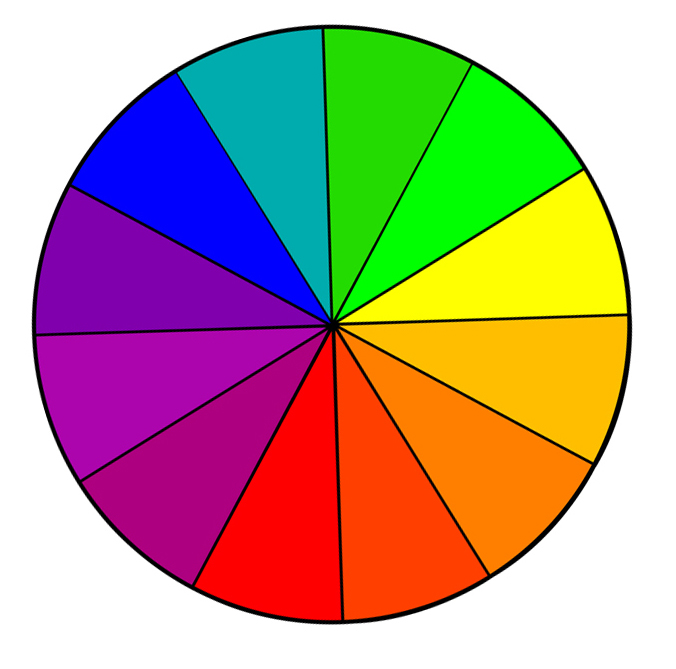 Most are familiar with the traditional color wheel, with cool colors on the left and warm colors on the right. |
Hue & Undertone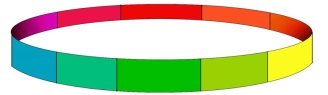 Remember: Warm colors are yellow-based. Blue-based colors are cool. You'll notice that true green has an equal amount of yellow and blue. It would be considered neutral but in temperature only (not neutral with regards to saturation). Add more than 50% yellow, and it becomes a warmer green, and add 51% or more blue it becomes a cooler green. |
Value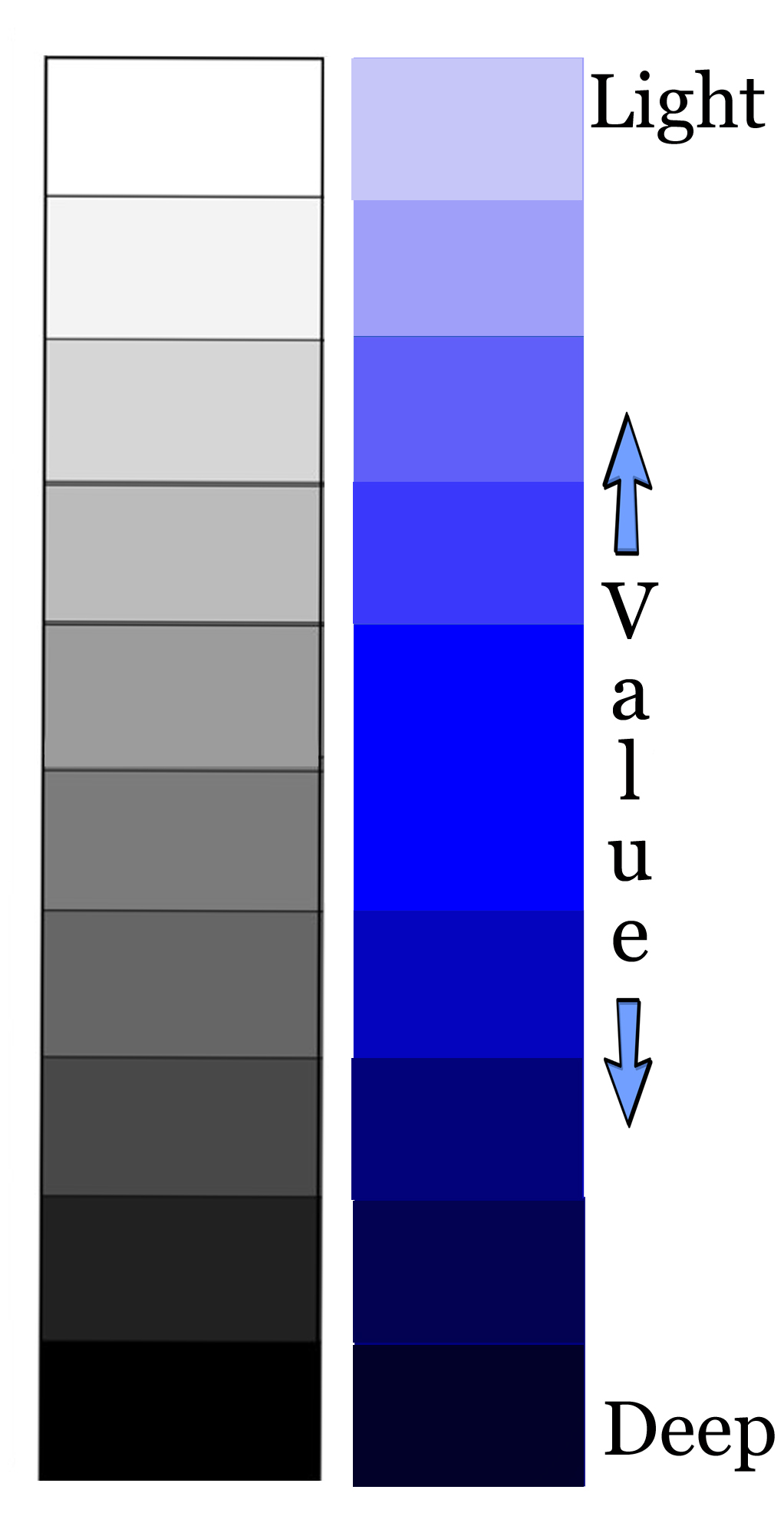 Value means the lightness or darkness of a color. |
Chroma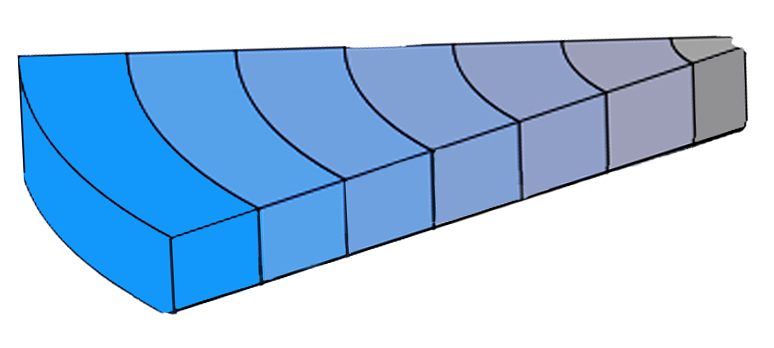 Take a pie slice out of one of the colors from the color band above. It is most saturated at the outer ring and gets progressively less saturated as it moves inward. |
Albert Munsell's Color System
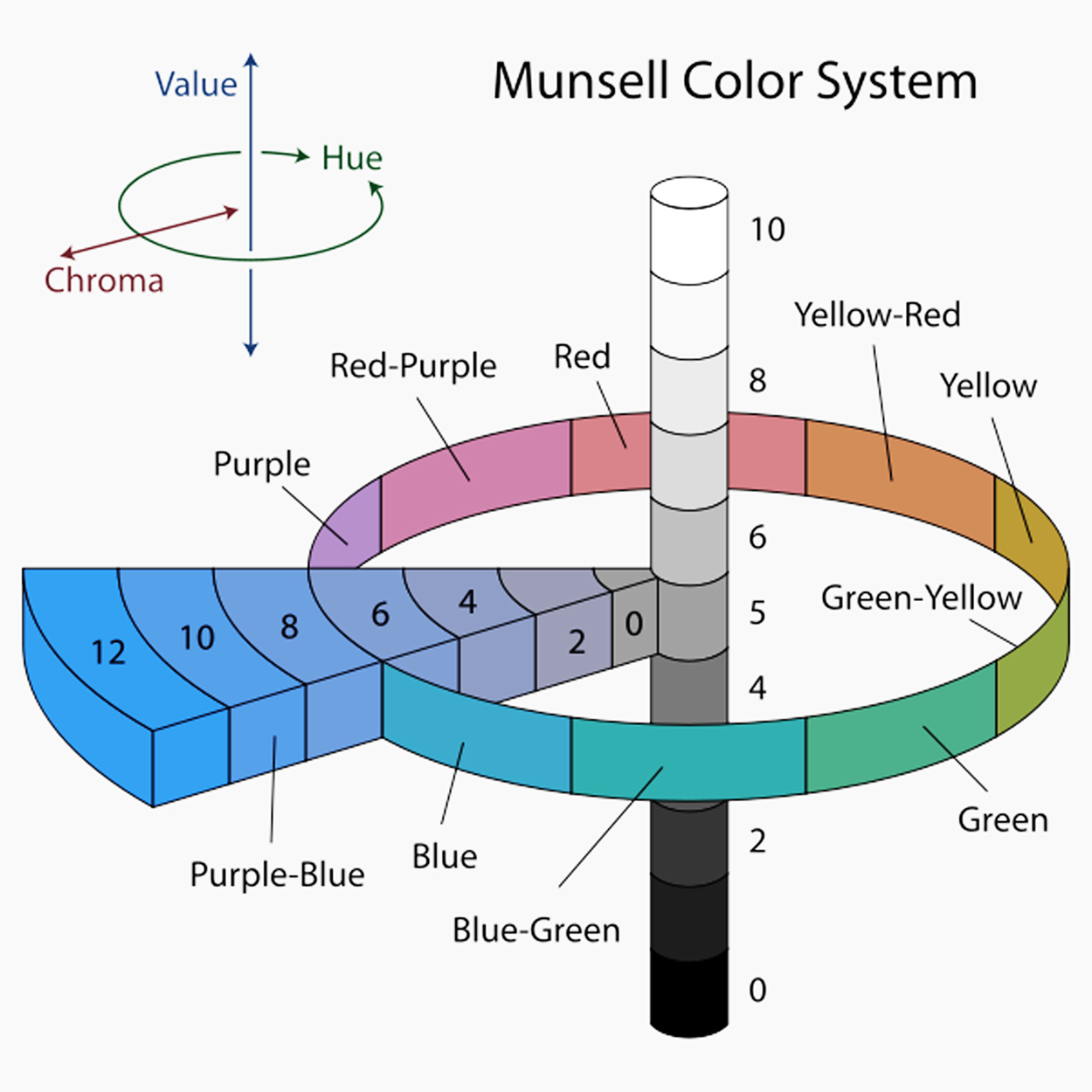
Now that you understand the three color traits of Hue, Value, and Chroma, you can understand artist Albert Munsell's color theory. He was an artist who developed a system for describing colors. Most color systems credit him as the foundation of their color theories. And he definitely is the foundation for the ColorBreeze™ System.
The 4-Season Color Theory System
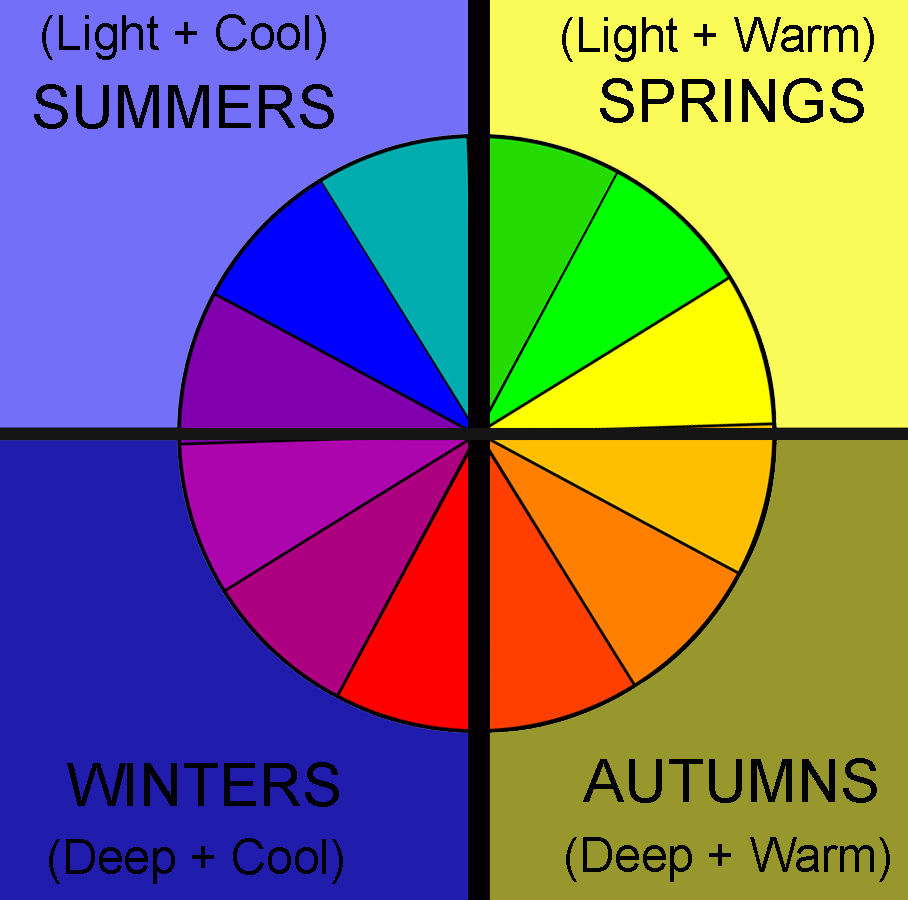
The 4-Season Color System is what started the whole color analysis craze in the 1980s. They based on the basic color wheel, where the cool colors are on the left, and the warm colors are on the right. People with cool characteristics (eyes, hair, and skin) were considered Summers or Winters; People with warm traits were either Springs or Autumns.
Before I go into the specifics, I would like to say that, compared to the much more advanced systems out there, including my ColorBreeze™ System (which has a total of 28 seasons!), the 4 Seasons might seem woefully outdated and almost ineffective.
Indeed, I've heard from some people that color analysis, in general, is ineffective, no matter how 'advanced' it may be. So the 4-season system is usually just dismissed as useless.
But I disagree. Upon those 4 seasons are what all the advanced systems are built. In reality, all the new seasons or categories are simply sub-sections of the broader main category. So understanding the 4-Seasons and what they are about is very important.
Even if you never wanted to learn any of the advanced color systems and you only wanted to stick with the 4 seasons, that's ok. You will be better off than those who have no interest in enhancing their natural coloring and instead just follow every fashion color trend that comes along.
If you do nothing but determine your basic undertone of warm or cool, you will be able to know what jewelry and metals will look better for you (silver for cools and gold for warms), or whether you should choose peach or pink lipstick and blush (pink is cool; peach is warm). I assure you, this is a crucial thing to get correct.
However, for a complete, accurate color analysis, the 4-seasons is a start, but it's not complete. Still, I do value the 4-seasons and am a little defensive of it when I hear criticisms about it.
Study the 4-season color theory well, and then you can move on to the more complex 12-seasons next.
 |
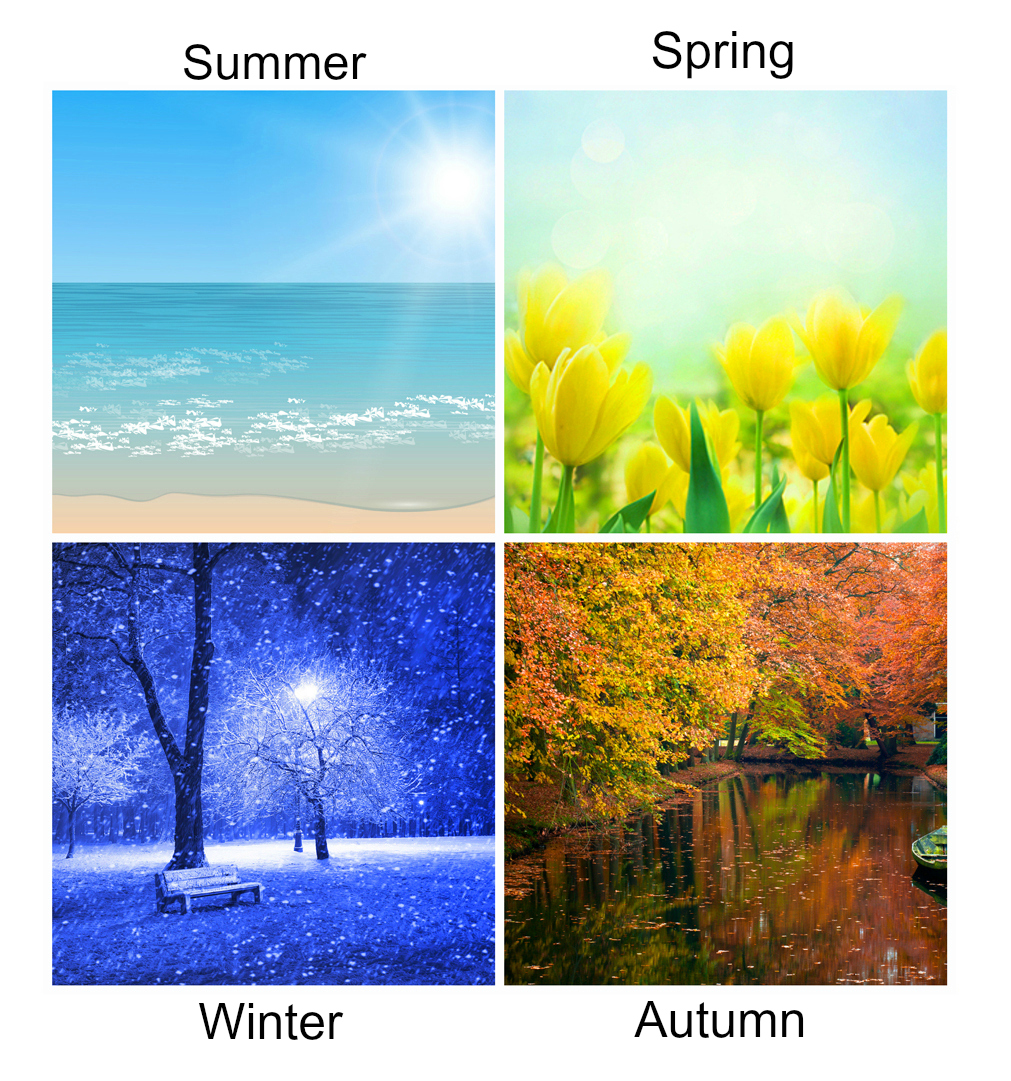 |
The 4 Season Color System just happened to match beautifully with the colors one would see in the North American landscape as they experience the 4 distinct weather seasons of Summer, Spring, Autumn, and Winter.
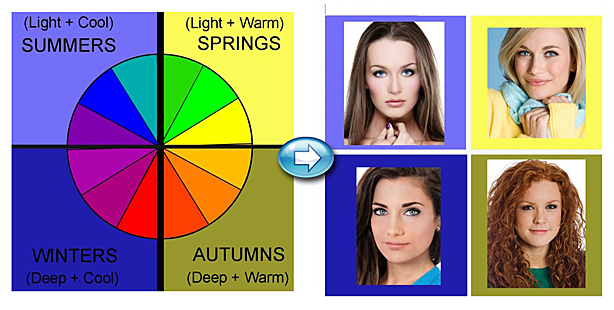
All of the seasons in the 12-season system, and my ColorBreeze™ System, are some sort of variation or evolution of these 4 main seasons.
Color Analysis is about understanding the fundamental principles of color, as well as learning how they interact to create the endless variations of human coloration. We should start at the beginning with the 4 seasons.
Return to Home page
SHOP

Recent Articles


-
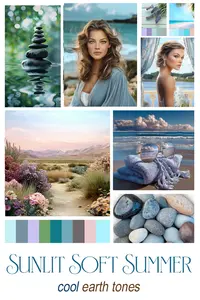
Cool Earth Tones - not all earth tones are warm | Color Allure
Oct 01, 26 11:04 PM
 Cool earth tones include stone, pebble, cool ocean blues. See my mood board of some cool earth tones of the Sunlit Soft Summer.
 -
Why AI Cant Replace a Skilled Color Analyst | Color Allure
Sep 27, 26 01:04 PM
 Why AI Cant Replace a Skilled Color Analyst explains the limitations of an ai color analysis.
 -
Find a ColorBreeze® Certified Consultant | Color Allure
Aug 03, 26 03:55 PM
 Meet our certified ColorBreeze® consultants — professional color analysts trained and licensed in the full 28-season system to help you find your colors

CONTACT
www.ColorAllure.com
Lora Alexander
lora@colorallure.com
779.770.4716

LEARN MORE
TRAINING
Learn the ColorBreeze™ System
(accepting new enrollments)
© Copyright 2008-2026 - ColorAllure. Privacy Policy