What Does Neutral Look Like?
When people hear the word neutral in color analysis, they often assume it means ” plain,” or “hard to define" and even "colorless.” In reality, neutral coloring is one of the most nuanced and often misunderstood types of coloring — and it can be surprisingly difficult to analyze.
People with neutral coloring tend to have a blend of warm and cool characteristics, sometimes close to a 50/50 balance. This blended temperature is what makes their undertone harder to pinpoint and why they are often miscategorized at first glance.
Neutral individuals rarely give strong temperature signals right away. Unlike someone who is clearly warm or clearly cool, neutrals tend to show:
- Skin that doesn’t lean obviously yellow/golden or pink/rosy
- Eyes that may read cool while the hair reads slightly warm (or vice versa)
- Overall coloring that looks pretty good in a wide range of colors
Because of this, neutrals are often initially placed into the wrong season — especially if analysis relies too heavily on one feature, such as eye color alone.
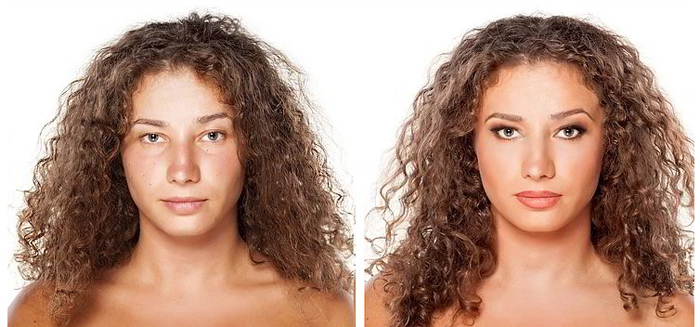
This woman above has a very neutral look, and people with this type of coloring can be especially challenging to analyze.
Even when someone appears perfectly balanced, one temperature is usually still slightly dominant, even if the difference is subtle. The goal is to determine which direction wins — warm or cool — even by a small margin.
At first, I thought she might be a Soft Summer because her eyes look quite cool (or at least not warm). But when undertones are unclear, I always recommend the same test: compare very cool colors against very warm colors and see which looks better — or at least which looks less problematic.
I tested this virtually using Photoshop, and the warm colors edged out the cool ones.
Based on that result, I assessed her as a Dusty Soft Autumn.
Why Not Smokey Soft Autumn?
She also could have fit into the Smokey Soft Autumn season quite well. However, because she falls closer to the middle range of value — neither especially dark nor especially light — I chose the lighter Soft Autumn season for her.
This is a good example of how neutral individuals often have more than one workable option, especially within closely related seasons. If she had even slightly darker eye color or hair color, I might have chosen the deeper version for her.
Makeup Choices for Neutral Coloring
With truly neutral coloring, you can often use truly neutral makeup shades successfully — and this woman would have looked great in them.
However, once I determined she leaned slightly warm, I adjusted the makeup just enough to support that direction:
- Soft brown eyeshadow instead of gray
- A peachy lipstick instead of a cool rose
The amplified result still looked natural, but slightly more alive.
She also would have looked beautiful in:
- Olive or warm-gray eyeshadow
- Nude or softly peach-toned lipstick
Those pale, quiet neutral shades — taupe, warm beige, muted tan — that wash out many people tend to look elegant and effortless on the lightest Soft Autumns.
Here's a few more examples of what neutrals look like

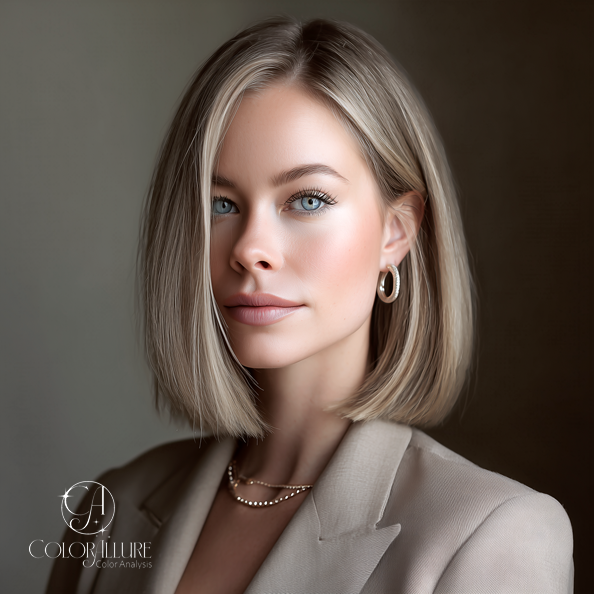
This woman can be called neutral. She has blended temperatures. I see a little coolness in her skin and eyes. Her hair has a touch of warmth but is also pretty neutral. I would label her a Sunlit Soft Summer.
A Note About the Term “Neutral”
Note: there is at least one color analysis system that calls anyone with blended temperatures "neutral". In these photos above, this concept fits. But they also will label, for example, a Deep Winter "neutral" because she has both warm and cool undertones.
I don't really care for this label. They mean to say that season is neutral in temperature only. But that is just one aspect of one's coloring. When most people think of the term neutral, they usually think of something not very saturated or bright.
These examples above are not very saturated or bright. They aren't the lightest or darkest. They are sort of right in the middle of three chroma, value, and temperature. They are true neutrals. And they are found most often in the soft seasons, Soft Autumn or Soft Summer.
Not surprisingly, they are the ones who come alive in neutral colors of tan, grey, beige, taupe, etc. These colors have the power to drain other saturated seasons. But on true neutral persons, their coloring is amplified, and they look naturally elegant.
Why True Neutrals Shine in Neutral Colors
Neutral colors like:
- Taupe
- Beige
- Soft gray
- Muted tan
can drain people with brighter or more saturated coloring. But on true neutrals, these colors often have the opposite effect.
Instead of dulling the face, they amplify natural harmony and create a look that feels calm, refined, and effortlessly elegant.
SHOP

Recent Articles


-
Find a ColorBreeze® Certified Consultant | Color Allure
Aug 03, 26 03:55 PM
 Meet our certified ColorBreeze® consultants — professional color analysts trained and licensed in the full 28-season system to help you find your colors
 -
Micro Color Analysis goes a little deeper than just naming a season.
Jun 19, 26 11:09 AM
 Micro color analysis is a term I'm using for when I give a small explanation for why I chose the season I did for certain ai art images.
 -
Ugly Colors — Which Ones Are Actually Flattering (and on Whom
May 31, 26 12:48 PM
 Ugly colors like beige, mustard, and mauve aren't always unflattering — it depends on your season. Find out which "ugly" colors might actually work for you




CONTACT
www.ColorAllure.com
Lora Alexander
lora@colorallure.com
779.770.4716

LEARN MORE
TRAINING
Learn the ColorBreeze™ System
(accepting new enrollments)
© Copyright 2008-2026 - ColorAllure. Privacy Policy